TL;DR: There is no single fair HVAC apprentice wage. Build a written step scale from your local journeyman rate, using the BLS median of $29.33 per hour as a national reference point, then tie raises to training and field milestones.
The BLS median pay for heating, air conditioning, and refrigeration mechanics and installers was $61,010 per year, or $29.33 per hour, in 2025. That figure covers the whole occupation, including experienced technicians. Use it as a reference point for a trained tech, not as an apprentice starting wage.
The right apprentice wage starts with your local journeyman rate
Job board figures for HVAC apprentices vary widely by region and employer. A number that looks normal in one market may be difficult to defend in another.
Start with the local journeyman rate your shop actually competes against. Then compare it with the BLS national median of $29.33 per hour. Your apprentice scale should sit below the trained technician benchmark while the apprentice is still receiving paid training and working under supervision.
This is a shop method, not a federal pay rule. Check local postings and your state apprenticeship agency. Apprenticeship.gov can also provide local benchmarks. Union and registered apprenticeship programs generally raise pay as a share of the journey-level wage when the apprentice accumulates hours.
The BLS describes HVAC apprenticeships as lasting several years, with paid on-the-job training and some technical instruction each year. That makes a single starting number a poor long-term pay plan.
Raise pay when the apprentice reaches a real milestone
A written scale works better when each step answers one question: what can this apprentice do now that they could not do before?
Use three or four steps. Set the pay for each step before the hire date. You can structure the scale this way:
| Step | Milestone | Pay decision |
|---|---|---|
| 1 | Starts paid field training and technical instruction | Set the entry rate below the trained technician benchmark |
| 2 | Passes EPA Section 608 certification and logs the first field hours you select | Raise pay to the next written step |
| 3 | Reaches another fixed hour count and runs a basic service call without a ride-along | Raise pay again |
| 4 | Meets state license eligibility requirements where required and handles the agreed scope of work | Move to the top apprentice step or trained technician rate |
The hour counts are yours to set. Put them in writing and review them at fixed points. Do not wait for the apprentice to ask after a difficult week.
Section 608 matters because the EPA requires nearly all technicians who handle refrigerants to be certified. Some states and localities also require HVAC technicians to hold a license. Verify certifications through your process, including the checks covered in how to verify HVAC certifications.
A ride-along apprentice can still carry part of the shop
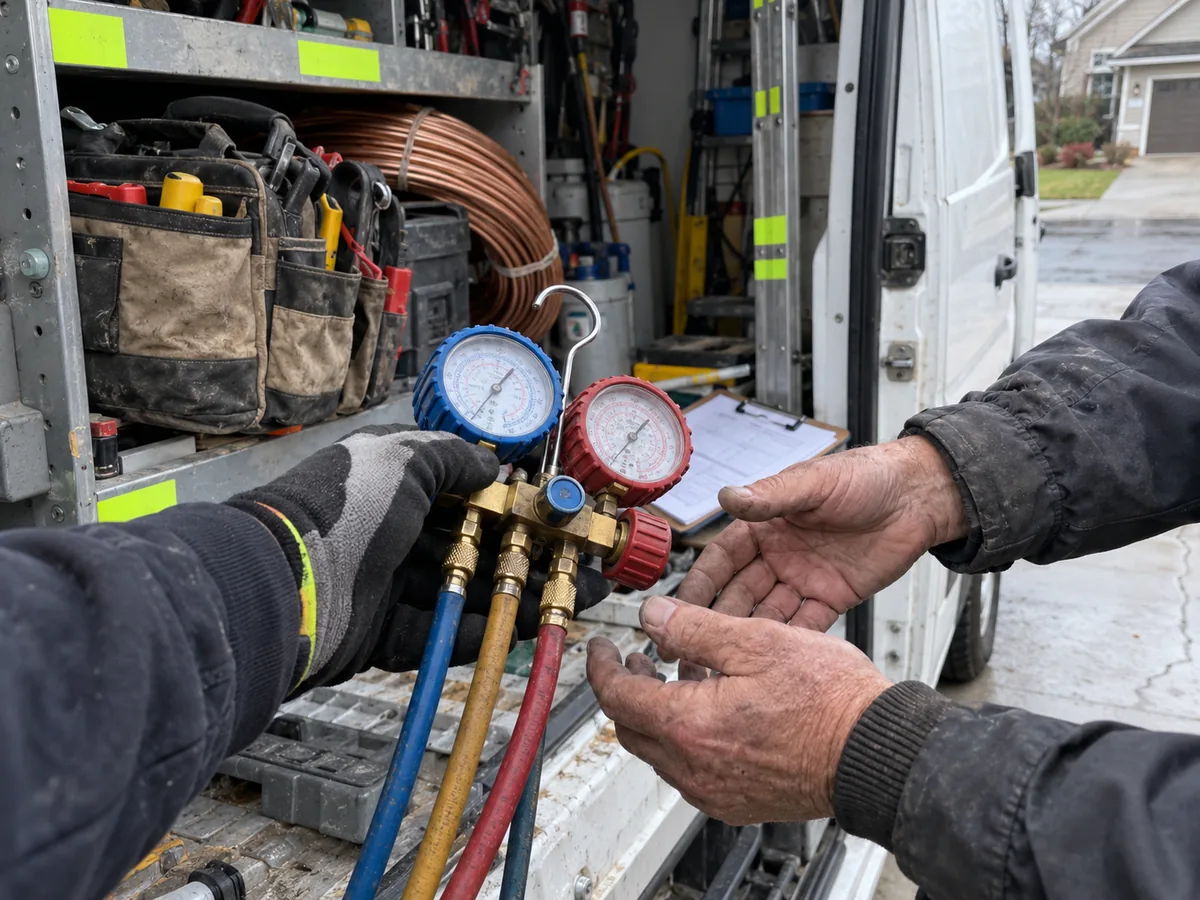
A pattern shop owners describe is familiar. The apprentice ends up answering the shop phone from the truck or van seat on slow ride-along days. The pay conversation often arrives right after the first week the apprentice covers calls the owner could not.
That work has value, but it should not replace a written pay scale. Decide what field responsibility earns the next step before the responsibility appears. “You helped us out this week” should not be the only reason a raise happens.
Dial 72 answers calls 24/7 and texts the owner a short summary of each call. That keeps an apprentice on a ride-along from being pulled onto the phone, while the owner decides which calls need a callback. Emergency escalation for no-heat or carbon monoxide calls goes straight to the owner.
Your pay structure also connects to billing. A trainee who spends time on a call does not automatically produce the same billable result as a trained technician. Review the relationship between compensation and billing in flat rate versus time and materials.
A written scale protects the shop when competitors call
The BLS projects HVAC employment to grow 11 percent from 2025 through 2035, much faster than average. It projects about 40,600 openings per year on average, mostly from workers who change occupations or leave.
That means an apprentice you train is recruitable by another shop. The most expensive thing to lose is often the apprentice who already knows your equipment, customers, safety rules, and dispatch habits.
A written scale gives the apprentice a reason to stay for the next milestone. It also gives you a clear answer when a raise request comes up. You can point to the certification, hour count, or service responsibility that controls the next pay step instead of negotiating one awkward conversation at a time.
Your shop economics matter here. Use the operating questions in what small HVAC companies make before setting a rate your calls cannot support. If growth changes the apprentice’s duties, growing a shop and freeing the office manager may also change which responsibilities belong in each step.
Refrigerant work still requires supervision
An apprentice’s pay step does not change the supervision rules for refrigerant work. EPA Section 608 certification is required for nearly all technicians handling refrigerants. Follow the rules that apply to the apprentice’s work and your location.
Use this guide to supervising apprentices on refrigerant work when you decide which tasks belong in each step. A milestone should describe work the apprentice is permitted and prepared to perform, not just work the apprentice has watched someone else perform.
Put the scale in writing before hire day
Set the local journeyman benchmark. Compare it with the BLS reference of $29.33 per hour. Choose three or four milestone steps, including Section 608 certification, fixed field hour counts, basic service calls without a ride-along, and state license eligibility where required. Write the pay and review points into the offer before the apprentice starts.
Then review the scale at the stated hour counts. Pay for demonstrated progress, not pressure from the latest conversation.