California caps most heat pump HVAC permits at $200
California’s Heat Pump Access Act now limits what a city can charge for a permit on a residential heat pump HVAC system serving one dwelling unit. The cap is $200. A heat pump water heater permit is capped at $150.
The cities that have to carry out the law fought it. Their argument is direct. Permits were never the main reason homeowners delay heat pump work.
SB 222, authored by Senator Scott Wiener, was approved by the Governor on September 28, 2026, and chaptered as Chapter 738, Statutes of 2026. The final Senate concurrence vote was 32 to 5 on August 25, 2026.
A common version of this day starts with no cooling. The equipment is ordered, the crew is ready, and the homeowner is sitting in a hot house. The job then stalls while the shop waits for a permit or an inspection window.
The law is meant to cut that delay. The cities say it targets the wrong problem.
The law changes permits, inspections, and local requirements
These details come from the California Assembly Local Government Committee analysis of SB 222 as amended June 15, 2026. Confirm the final text and your city’s requirements before changing your process.
Beginning July 1, 2027, a city or county must offer asynchronous inspections for covered installations. The licensed contractor and building inspector do not have to be on site at the same time. The inspector may contact the contractor by phone or real time video.
That does not remove the need for access. If the inspector finds a problem or needs the contractor to open an area, the inspector can require a second inspection with both parties present.
A city may charge no more than the estimated reasonable cost of the service, and no more than $200 for a heat pump HVAC system or $150 for a heat pump water heater. A city can exceed the cap only with a written finding and an adopted resolution or ordinance supported by substantial evidence of the reasonable cost.
The fee must be a regular fixed amount for the appliance type and posted publicly. Third party vendors can still charge processing or compliance check fees outside the cap.
The law allows up to one nondiscretionary permit per installation on or before January 1, 2028. A city may still issue separate permits for panel replacement or structural work. More than one permit requires written findings of a specific adverse health or safety impact that cannot feasibly be mitigated.
By July 1, 2028, cities must offer an online automated process that issues permits in real time to licensed contractors for qualifying swapouts. The system applies only when there is no new electrical panel or structural work.
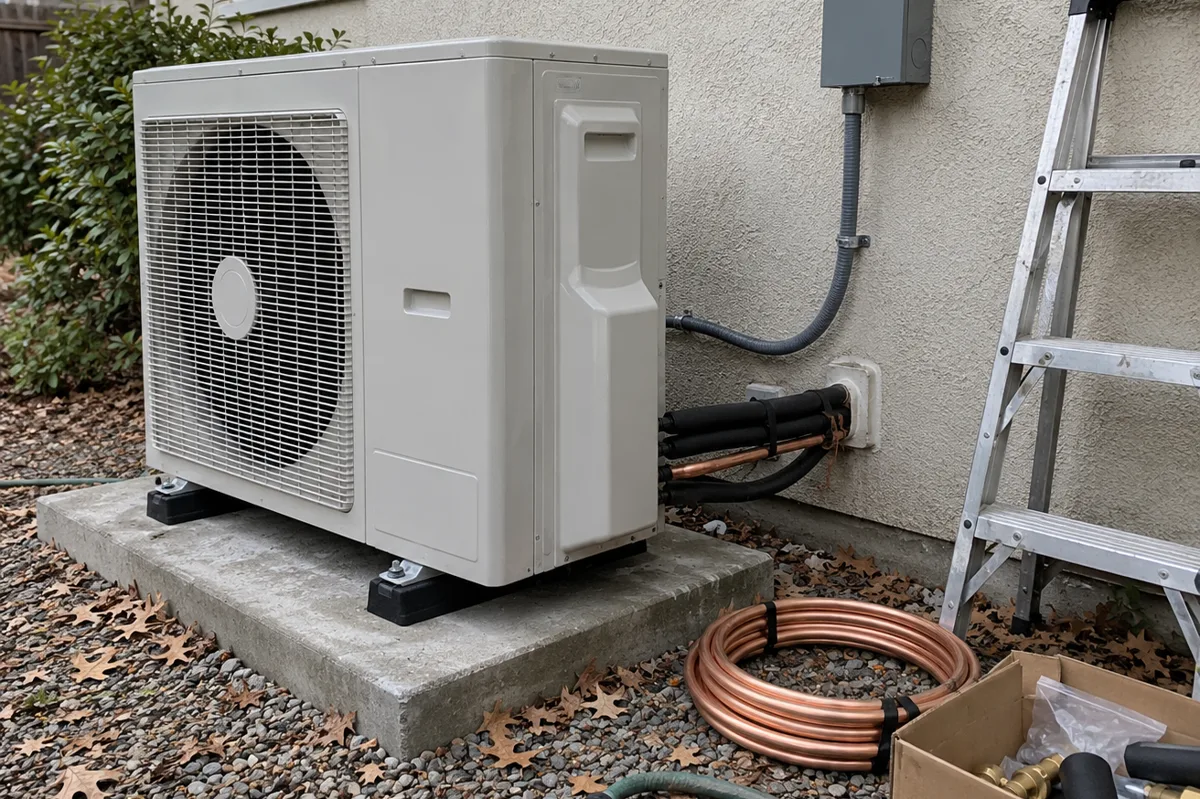
A swapout means new heat pump equipment installed in the same location as the equipment it replaces. More than 25 linear feet of ductwork takes the job out of that definition. So does changing a package unit to a split system, or a split system to a package unit.
Cities must post requirements, documents, and fees online. They must accept electronic applications and signatures. If a city requires a CF1R form, it cannot demand duplicative information beyond the applicant’s name and address.
Cities under 5,000 people and counties under 150,000 people, including each city inside such a county, are exempt from the automated permit, fee cap, and website posting provisions.
The law also limits some local add-ons. Side and back yard setbacks may be no more than 3 feet, and front yard setbacks may be no more than 10 feet. Noise standards for inverter based heat pumps may not be less than 15 decibels higher than limits applied to non-inverter equipment.
Certain HOA restrictions are void. An association cannot block replacement of a gas appliance with a code compliant electric appliance, restrict a heat pump, charge fees, require a specific contractor or product, or claim a rebate or commission. Exceptions apply when the installation would violate law or a required permit is denied.
Supporters say permit delay pushes owners toward unpermitted work
The bill’s co-sponsors are the Bay Area Air Quality Management District, Building Decarbonization Coalition Action Fund, and SPUR. AHRI and Daikin U.S. Corporation also registered support. The same air district is behind a separate Bay Area water heater rule that contractors have also argued over.
Supporters say permit fees range from about $50 to several thousand dollars, depending on the jurisdiction and project. Homeowners usually replace equipment when the old system fails. If the permit is slow or expensive, a homeowner may choose unpermitted work instead of going without heat, cooling, or hot water.
Permits also matter for rebates. TECH Clean California and Equitable Building Decarbonization require a permit for eligibility.
Supporters say cities can still recover their costs because the law allows a fee above the cap when the city documents the reasonable cost. They also point out that some automated permitting vendors serve cities at no charge.
California set a goal of 6 million heat pumps by 2030. An estimated 1.9 million were installed as of December 2024. A 2025 California Heat Pump Partnership report projected about 4 million by 2030.
Cities say equipment cost matters more than the permit
The League of California Cities, California State Association of Counties, Rural County Representatives of California, Camarillo, and Thousand Oaks opposed the bill.
Their strongest point comes from the CPUC commissioned California Water Heating Market Study. It named emergency replacement and high upfront cost as the two main barriers. Local permitting did not emerge as a significant barrier.
Opponents say heat pump HVAC installations cost $5,000 to $15,000 or more, often before panel upgrades. A $200 permit does not change the main purchase decision.
They also say fees are already limited to reasonable cost under existing law, a limit reaffirmed by Proposition 26. Permitting lets cities check that installations meet safety and building codes.
Their concern is local authority. They call a state set framework a precedent for preempting local rules, and say automated systems require software, training, and maintenance. That cost exists even in cities that already issue permits over the counter.
They argue the Legislature should expand rebates instead. California’s HEEHRA program showed demand for rebates of up to $8,000, then ran out of funding, a problem covered in our look at the fully reserved HEEHRA rebates.
Your shop still quotes permits the old way this season
Nothing changes on the first day. The asynchronous inspection date is July 1, 2027. The automated permit deadline is July 1, 2028. For now, pull permits the way your city requires. Do not quote every customer a $200 permit.
Even after the law applies, ask the building department for the fee schedule posted on its website. A city may have a documented exception. A small city or county may be exempt. A third party technology fee may sit outside the cap.
Scope the job before promising a same day permit. More than 25 linear feet of ductwork, a package to split conversion, panel work, or structural work can remove the job from the automated path.
For an automated heat pump HVAC swapout, the contractor must certify under penalty of perjury that the system was sized using a load calculation under ACCA Manual J, the SMACNA Residential Comfort Systems Installation Standards Manual, the California Mechanical Code, or successor provisions. The contractor must provide the calculation to the local authority on request. We cover the Manual J sizing question separately.
That certification is a real legal obligation. A shop that skips the load calculation on a fast path swapout is taking on exposure that did not exist in the same form before.
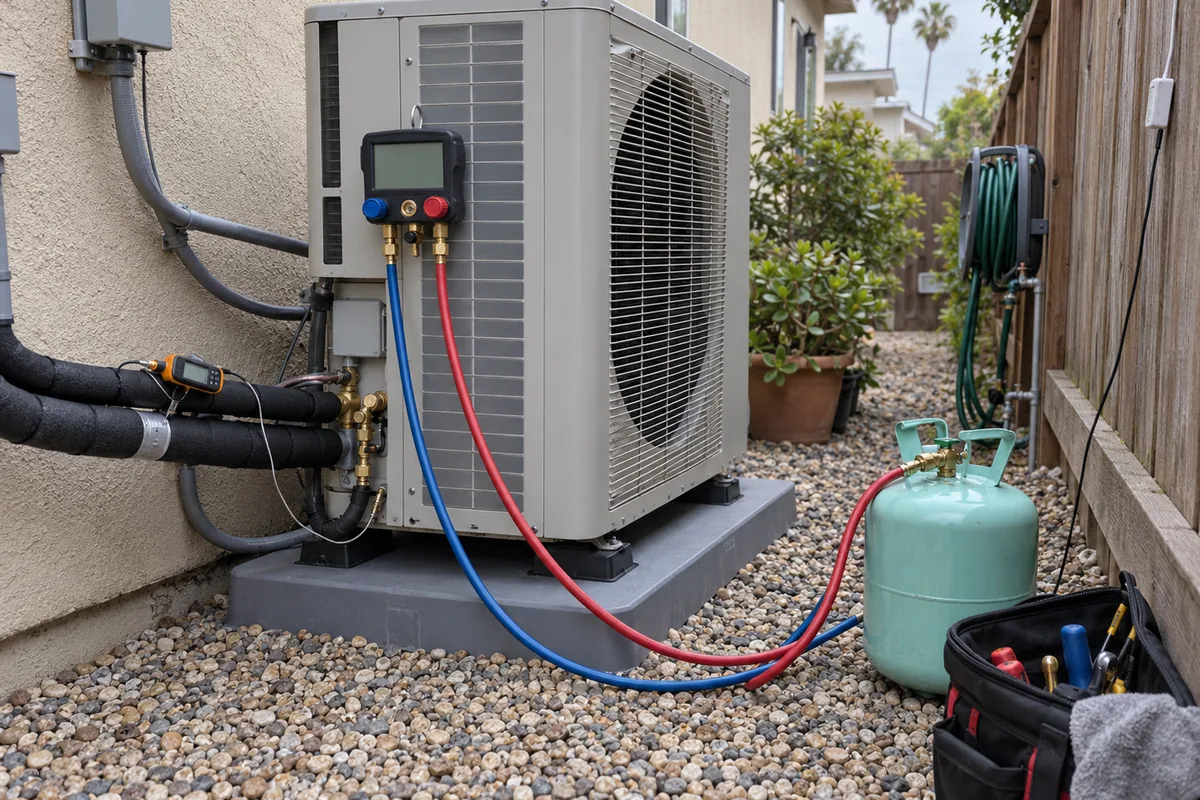
The changeout may also carry other paperwork, such as the refrigerant charge verification on a heat pump changeout.
After hours calls can start the permit work earlier
The calls that become permit sensitive heat pump swapouts often begin as emergency no cooling or no heat calls after hours.
Dial 72 answers those calls 24/7, texts the shop a triage summary, books onto the shop’s calendar, flags replacement leads, and handles English and Spanish callers. It captures the equipment age, symptom, and address, then flags a possible replacement so the shop can begin permit and scope questions the next morning instead of the next afternoon.
See how it works or review pricing.
Quick answers
Is every California heat pump HVAC permit capped at $200?
No. The cap has exceptions for documented reasonable costs, third party vendor fees, and exempt small cities and counties.
Does the law cover new construction?
No. It covers a single residential heat pump water heater or heat pump HVAC system serving one dwelling unit. New residential construction is excluded.
Does every heat pump swapout qualify for real time permitting?
No. The job must be a swapout with no new panel or structural work. More than 25 linear feet of ductwork or a package and split system conversion takes it out of the automated path.
What should a shop do now?
Keep using the current city process. Ask for the posted fee schedule, scope duct and panel work before quoting a permit, and complete the required load calculation before using the automated path.